How Professional Termite Control Services Target Colonies at the Source
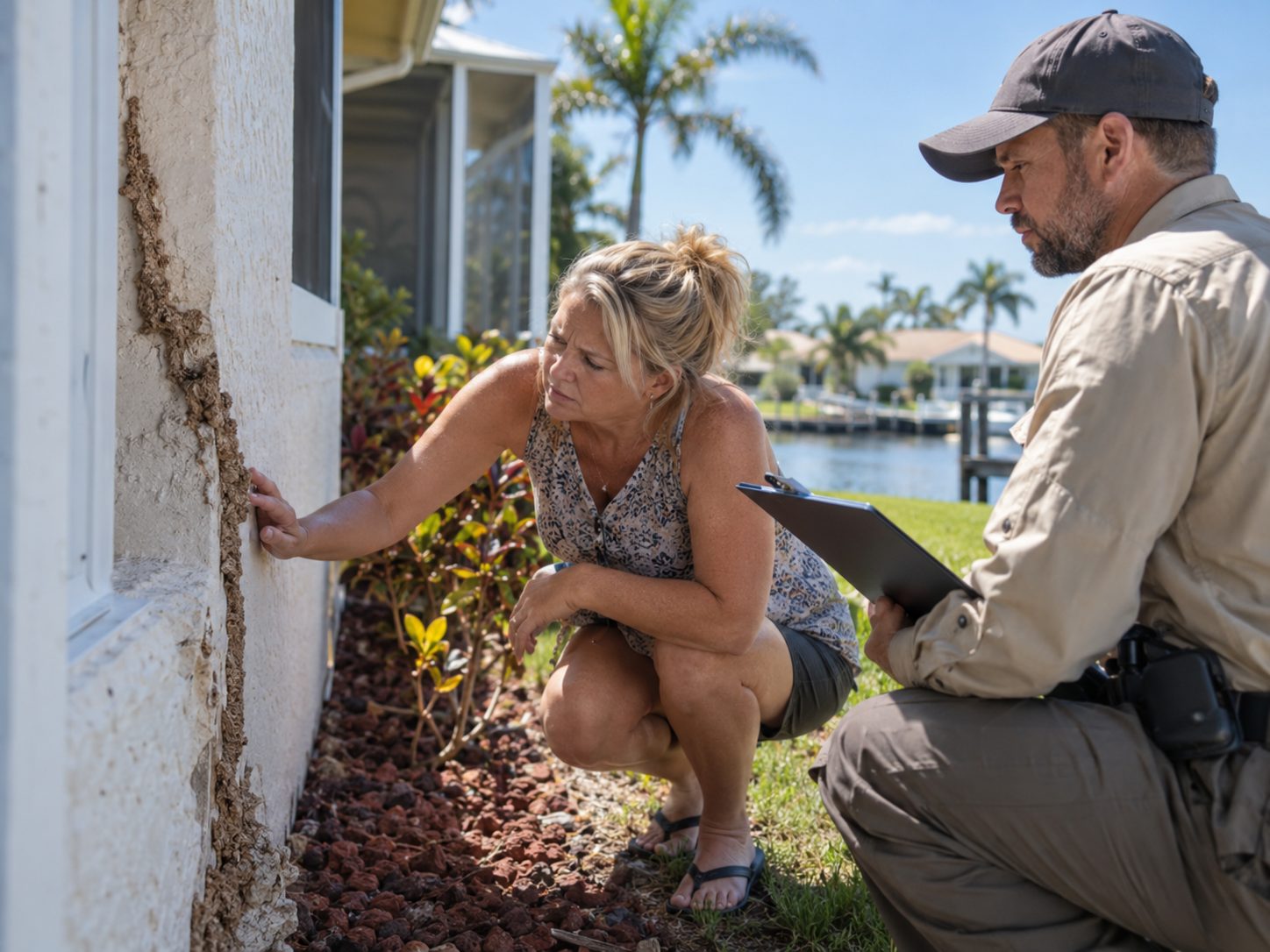
A homeowner usually notices termites late. Not when the first workers arrive, not when the colony starts feeding, but when the damage has already become visible. A baseboard sounds hollow. A door frame blisters. Paint bubbles in a place that never seems wet. Sometimes the first clue is a spring swarm, a handful of winged reproductives collecting near a window, and by then the insects behind the wall have often been active for months or years.
That delay is exactly why professional termite work is different from ordinary pest control. Spraying what you can see is not enough. Wiping out a few visible insects does little if the breeding core of the colony remains untouched beneath the soil, inside a wall void, or in a hidden moisture pocket under a slab. Effective termite control is not really about the termites in front of you. It is about reaching the colony structure that supports them.
This is where trained termite specialists earn their keep. Professional Termite Control Services are built around one central principle: stop the colony where it lives and feeds, not just where the damage finally appears.
Surface activity is rarely the real problem
People often imagine termite infestations as a localized issue. They think, quite reasonably, that if insects are showing up in one window sill or one section of trim, the problem must be right there. In practice, that visible area is often just the feeding edge.
Subterranean termites, which are the most destructive species in many regions, operate from the soil upward. Their workers travel through shelter tubes and hidden galleries, moving from the nest to food sources while staying protected from air and light. The point where a homeowner sees damage may be several feet, or even many yards, from the central population. Drywood termites behave differently, nesting directly inside the wood they consume, but even then the visible kick-out holes or frass piles rarely reveal the full footprint of the colony.
I have seen homes where owners patched and painted the same trim section three times because the stain kept returning. They assumed it was a moisture issue. The actual source turned out to be an active termite run behind an adjacent wall, with feeding extending into the sill plate below. The repair looked fine from the outside. The colony was never interrupted.
That gap between symptom and source is why termite control requires investigation before treatment. Guesswork wastes time, money, and often structural material that could have been saved with a targeted response.
How professionals think about the colony
A termite colony is not just a cluster of insects. It is a functioning biological system. There are workers gathering food, soldiers defending passageways, reproductives maintaining growth, and in mature subterranean colonies, a queen whose output sustains the population over long periods. Depending on the species and age of the colony, numbers can range from the tens of thousands to far beyond that.
Professionals approach this system strategically. The goal is not only to kill termites on contact. The real aim is to break the colony’s ability to feed, move, reproduce, and recover.
That might mean creating a treated zone in the soil that intercepts workers as they travel between nest and structure. It might mean placing bait stations where foraging termites will recruit nestmates and spread a colony-suppressing active ingredient over time. In a drywood infestation, it could mean drilling into specific galleries, injecting termiticide, or recommending whole-structure fumigation when the spread is too broad for localized treatment.
The method depends on species, construction type, infestation age, access points, moisture conditions, and the homeowner’s tolerance for disruption and follow-up maintenance. Good termite control is less about one miracle product and more about matching the biology of the pest to the structure in front of you.
Inspection is where real targeting begins
The public tends to focus on the treatment itself, but the inspection often determines whether the outcome will hold up. A careless inspection leads to partial treatment, and partial treatment is one of the main reasons termites come back.
A thorough inspection is not a quick walkaround with a flashlight. It usually includes the foundation perimeter, crawl spaces, slab joints, expansion cracks, plumbing penetrations, attic framing where applicable, exterior grade levels, attached porches, wooden landscape elements that touch the structure, and any interior areas showing paint distortion, softened trim, or unexplained moisture. In some buildings, inspectors also rely on moisture meters, probing tools, borescopes, and experience with local construction patterns.
What they are trying to establish is not simply whether termites exist. They need to understand how termites are entering, where they are feeding, what species are involved, and what conditions are supporting them. A leaking hose bib near a foundation wall can matter. So can firewood stacked against siding, earth-filled porches, foam insulation extending below grade, or a flower bed built high enough to bridge the gap above the foundation.
One of the more important judgments during inspection is distinguishing between active infestation and old damage. Termites may have left, especially after environmental changes or previous treatment, but the wood can still look rough and tunneled. Conversely, a piece of wood can look fairly intact on the surface while being extensively hollowed within. This is why experienced inspectors tap, probe, and follow patterns instead of relying on appearance alone.
Soil treatments work by cutting off movement
For subterranean termites, one of the most reliable professional methods is a soil treatment using a nonrepellent termiticide. The concept sounds simple, but the execution is highly technical. The product is applied in a continuous treated zone around and sometimes beneath the structure, especially near known entry points.
Nonrepellent chemistry matters because termites cannot easily detect and avoid it. As workers move through treated soil, they pick up the active ingredient and transfer exposure within the colony through contact and grooming. Unlike old-fashioned repellent barriers, which could sometimes push termites to find a gap and route around the treatment, nonrepellent products are designed to exploit normal termite behavior.
Continuity is everything here. A missed section around a plumbing line, a cold joint in the slab, or a difficult area under a stoop can become the path the colony continues to use. This is why professional application often involves trenching, rodding, and in some slab structures, drilling through concrete at measured intervals to reach the soil below. To a homeowner, the holes may look excessive. To a specialist, each one closes off a route that termites would otherwise exploit.
The details matter down to the gallon rate and the linear footage. Too little material creates weak spots. Too much in the wrong place is wasteful and does not improve performance. This is not casual spraying around the outside wall. It is a calibrated treatment intended to sever the connection between the colony in the soil and the wood in the building.
Baiting systems are designed to let termites do the delivery
Baits work on a different timeline and a different logic. Instead of creating a broad treated zone, bait systems use the termites’ own foraging and food-sharing behavior to deliver control back into the colony.
Stations are installed in the ground around the structure or, in some cases, directly over active interior areas. Initially they may contain monitoring cartridges that attract foraging workers. Once termites are feeding, the station is switched to a bait matrix containing a slow-acting active ingredient, often an insect growth regulator. Because it does not kill immediately, exposed termites continue feeding, return to the colony, and distribute the bait through trophallaxis, the exchange of food and fluids among nestmates.
This is one of the closest things in pest management to targeting the problem at its biological center. You are not just stopping a few workers near the house. You are undermining the colony’s ability to molt, develop, and replace losses.
Baits can be excellent in sites where trenching is difficult, where drilling would be disruptive, or where long-term monitoring is a priority. They are also useful as part of an integrated approach. Still, they are not instant. Homeowners sometimes get uneasy because they want visible, immediate action. With baits, patience matters. The system relies on discovery, feeding, recruitment, and spread through the social network of the colony. That can take time, especially in cooler seasons or in landscapes with abundant competing food sources.
The best providers explain this clearly. They set expectations, inspect stations consistently, and adjust placement or strategy if termite pressure shifts.
Drywood termites require a different playbook
Drywood termites do not need soil contact. They live inside the wood they consume, which changes both diagnosis and treatment. Instead of mud tubes rising from the ground, you may see tiny fecal pellets, blistered wood surfaces, or occasional swarmers emerging indoors.
Because drywood colonies can be scattered in separate pieces of wood throughout a structure, source-targeting becomes a matter of finding galleries accurately and judging whether the infestation is localized or widespread. In a localized case, a professional might drill into the affected area and inject a termiticide or use a targeted foam that spreads through internal voids. If inspection suggests multiple colonies across inaccessible areas, whole-structure fumigation may be the more dependable option.
Homeowners often hesitate when they hear the word fumigation, and that is understandable. It is disruptive, requires preparation, and carries cost. But there are situations where anything less leaves too much behind. Professionals are supposed to make that call honestly. Overprescribing a whole-structure treatment when spot treatment would suffice is poor practice. Pretending a severe, multi-area infestation can be solved Termite Control Services with a few injections is worse.
The right choice depends on how much of the colony network can be confidently reached. That is the real question in drywood work.
Why colony elimination is harder than it sounds
The phrase “kill the colony” gets used loosely in marketing, but true colony elimination is not always simple or even verifiable in a direct way. In some cases, especially with baits, a provider may reasonably conclude that colony activity has collapsed based on feeding cessation, the disappearance of activity signs, and follow-up inspection results. In other cases, particularly with soil treatments, the main success measure is protection of the structure and interruption of termite ingress, not necessarily confirmed extermination of every related nest in the surrounding area.
That distinction matters because the environment around a house can support multiple foraging groups or future invaders. A property line, a tree stump, or a buried scrap of wood can host termites independent of the insects currently attacking the structure. Good professionals do not oversell certainty where biology does not allow it. They focus on defensible outcomes: no active attack on the building, no viable route of entry, and monitoring that catches changes before damage compounds.
This is one reason warranties and follow-up inspections are such a meaningful part of professional service. The treatment is not the entire job. The responsibility continues after the initial application.
Construction details shape the treatment plan
No two structures present exactly the same challenge. A slab-on-grade home with multiple additions, interior plumbing chases, and decorative stone veneer behaves very differently from a crawl-space house with exposed piers and good subfloor access. Commercial buildings introduce another level of complexity, with expansion joints, utility penetrations, inaccessible wall lines, and tenant scheduling constraints.
Professionals who know termite behavior also know construction. They understand where hidden bridges form, where treatment access is likely to be incomplete, and where termites tend to exploit overlooked details. A patio poured tight against a foundation can complicate trenching. A finished basement can hide critical sill areas. Foam board insulation below grade can conceal tube activity. Earth-wood contact around steps or planters can bypass otherwise solid defenses.
This is why cookie-cutter treatment plans often fail. The product may be sound, but the application design is wrong for the building. Real termite control is part entomology, part structural detective work.
Moisture and wood contact are often the quiet accomplices
While termites can invade well-kept homes, certain conditions make life easier for them. Chronic moisture is one of the biggest. Leaky downspouts, clogged gutters, poor drainage, condensation under HVAC lines, and plumbing seepage can all create conditions that soften wood and support hidden activity. Direct wood-to-soil contact is another common issue, especially with fence posts attached to the house, siding too close to grade, or untreated framing in contact with fill.
Professional Termite Control Services often include recommendations that have nothing to do with pesticide at all. That can surprise homeowners who expect a purely chemical fix. Yet fixing grade levels, reducing moisture, removing cellulose debris, and opening inspection access often make the difference between short-term relief and long-term control.
I have seen beautifully executed treatments undermined by untreated environmental problems. One property kept showing renewed pressure near a garage wall. The issue turned out to be a slow irrigation leak under dense shrubbery, feeding constant moisture into the exact zone termites favored. Until that leak was corrected, the site remained attractive.
What separates professional work from do-it-yourself attempts
There are over-the-counter products that kill termites on contact. There are foams, sprays, stakes, and concentrates marketed with confidence. Some have legitimate uses in limited situations. What they usually do not provide is complete route coverage, accurate species identification, or any reliable way to confirm that the colony source has actually been addressed.
The challenge with do-it-yourself termite treatment is not just product strength. It is hidden access and treatment continuity. A homeowner may hit the visible tube on the garage wall and destroy evidence that would have helped map the infestation. They may inject foam into one stud bay while termites continue entering through a slab crack fifteen feet away. Worse, disturbed termites sometimes shift activity, making later inspection harder.
Professionals also work under label directions, application standards, and in many jurisdictions licensing rules that affect where and how treatment can legally occur. Foundation drilling, trench dimensions, dilution rates, and restricted-use products are not trivial details. They are part of what makes the treatment effective and defensible.
The best results usually come from a layered approach
Single-method answers are appealing, but termite management often works best when it combines direct treatment, structural correction, and ongoing observation. That does not mean every home needs every service. It means professionals should choose a strategy with enough depth to match the risk.
In practice, a strong program may include a soil treatment to protect the structure, moisture corrections to reduce attraction, and annual inspections to catch new pressure before damage escalates. In other settings, a baiting system may be the central tool, supported by localized treatment where activity is concentrated. The right mix depends on the property and the species involved.
When homeowners ask what treatment is “best,” the most honest answer is usually, “best for what building, what termite, and what conditions?” A provider who jumps straight to one standard package without asking those questions is telling you something, and it is usually not good.
Signs that a service is focused on the source, not the symptom
A competent termite company tends to sound different from a company selling a quick fix. The discussion is more specific. They talk about species, access, construction type, treatment zones, and follow-up, not just about killing bugs.
Here are a few practical signs that the service is source-focused:
- The inspection is detailed and documented, with clear notes about activity areas, conducive conditions, and the likely route of entry.
- The treatment plan explains why a particular method fits the structure, rather than offering the same approach for every home.
- The provider discusses limitations honestly, including inaccessible areas or the need for moisture and repair work.
- Follow-up is built into the service, whether through station monitoring, warranty terms, or scheduled reinspection.
- Recommendations include prevention measures, not only pesticide application.
That kind of thoroughness may cost more upfront, but it usually saves money where it matters most, in avoided structural damage and reduced retreatment.
What homeowners should expect after treatment
The period after professional treatment is where expectations need to stay realistic. Dead silence overnight is not always the sign of success, and some lingering activity can occur for a short time depending on the method used. Bait systems, in particular, work gradually. Soil treatments may stop structural invasion quickly, but visible signs such as discarded wings or old tubes can remain until cleaned or naturally weathered away.
A good provider should tell you what to watch for, what is normal, and what deserves a callback. Fresh mud tubes rebuilt after treatment, new swarmers emerging from a previously unaffected interior area, or ongoing wood damage signs may require reinspection. On the other hand, old damaged wood does not repair itself just because the termites are gone. Cosmetic evidence can persist long after the infestation has been stopped.
This is another point where expertise matters. Professionals know how to distinguish between residual evidence and active return. Homeowners should not be expected to make that judgment alone.
The value of stopping termites before repairs begin
One expensive mistake shows up again and again: repairing the visible damage before the infestation is fully addressed. Contractors replace trim, patch sheetrock, or sister damaged framing, but if active termites are still feeding nearby, that new material simply becomes fresh food.
The correct sequence is usually control first, repair second, unless there is an urgent safety concern requiring immediate structural shoring. Once the infestation is interrupted and the source route is handled, repairs can be made with much better confidence. In some cases, the inspection done by a termite specialist also helps a contractor understand how far the damage likely extends, which prevents underbidding and surprise demolition later.
Termites are costly not only because they consume wood, but because they hide the true scope of the problem until walls or trim are opened. Stopping the colony at the source limits that uncertainty.
Why source targeting remains the standard that matters
Anyone can kill visible insects. The hard part is cutting off the population that keeps replacing them. That is the dividing line between superficial treatment and professional termite control.
Professional Termite Control Services target colonies at the source by understanding termite biology, tracing movement patterns, matching treatment to the structure, and following through until the building is protected. Sometimes that means intercepting subterranean workers in the soil. Sometimes it means using baits to carry control back through the colony’s food-sharing network. Sometimes it means locating drywood galleries precisely, or admitting that only a whole-structure approach will reach the full extent of the infestation.
The method can vary. The principle does not. If the colony remains functional, the problem remains alive. If the colony’s access, feeding, and reproduction are disrupted where they begin, the structure has a real chance to stay protected for the long term.
That is what homeowners are really paying for, not a spray, not a patch, but a strategy strong enough to reach the hidden source of the damage.
Maximum Pest Control
836 NE 7th Terrace Suite #5
Cape Coral, FL 33909
+1 239-772-7363
FAQ About Termite Control Services
What are two signs of a termite infestation?
Mud tubes along a foundation and piles of shed wings near doors or windows are two signs to investigate. Mud tubes are associated with subterranean termites. A licensed inspector can identify the insect and assess whether there is active infestation.
How many years does a termite treatment last?
There is no single timeline for all treatments. The method, site conditions, and maintenance affect how long protection lasts. Bait systems rely on monitoring and service. Ask the provider for the recommended inspection schedule and the terms of any coverage.
Is Termite Treatment Expensive in Cape Coral?
Cost depends on the termite species, the size and construction of the property, the extent of activity, and the treatment method. Request a written estimate after inspection and ask whether monitoring, follow-up visits, and renewals are included.